


Career Guidance in Changing Times: How Can Schools Contribute to Sustainable Careers?
Editors: Christoph Krause, Christof Nägele, Rudolf Schröder, Małgorzata Rosalska, Soledad Romero-Rodríguez
Career Guidance in Schools from European and International Perspectives: Rethinking Career Guidance in Times of Uncertainty and Transformation
Editors: Rudolf Schröder, Christof Nägele, Małgorzata Rosalska, Anna Wawrzonek, Soledad Romero-Rodríguez
Schröder, R., Nägele, C., Rosalska, M., Wawrzonek, A., & Romero-Rodríguez, S. (Eds.), Career guidance in schools from European and international perspectives: Rethinking Career Guidance in Times of Uncertainty and Transformation. Career Lead. https://doi.org/10.5281/zenodo.15063842
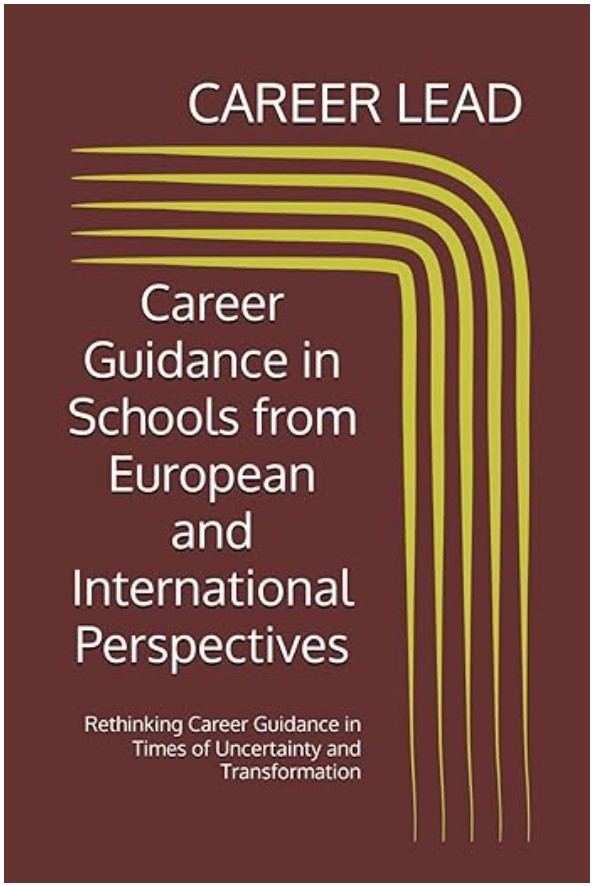
Can be ordered in printed form from Amazon
ISBN: 9798313895031
There is good reason to believe that career guidance for school students has been never more important. The argument is simple. Across the world, young people are staying in education and training for longer and in greater numbers than before. More people have more decisions to make about what they study, where they study and how hard they study. At the same time, driven by technological innovation and the response to climate change, the world of work globally is going through substantial change. Student decision-making consequently becomes more difficult as uncertainty about the demand for skills and knowledge grows. In such circumstances, it is evident that there is a greater need for guidance systems to form bridges between the worlds of education and employment. The theoretical argument for guidance is strong, but more than that, we now have unprecedented evidence to show that it can be expected to make tangible, material differences to the life chances of young people. Reviews of longitudinal datasets undertaken over the last five years find consistent proof that important forms of teenage career development can be confidently associated with better employment outcomes in adulthood, whether lower unemployment rates, higher wages or greater job satisfaction. In our work at the OECD, we see benefits clustered around the ways that students actively explore their potential futures in work (notably through episodes of employer engagement), gain first-hand experience of undertaking tasks in workplaces, and demonstrate clear and informed career thinking (Covacevich, 2021).
The case for investment in career guidance is stronger than ever, but international evidence shows that in many countries, too few students are engaging in important career development activities. The 2022 round of the Programme for International Student Assessment (PISA) shows for example, that on average, across OECD countries only:
- 55% of students aged 15 have spoken with a career advisor,
- 45% have visited a workplace or participated in job shadowing,
- 35% taken part in a job fair,
- 35% had completed an internship.
What’s more, PISA shows that teenage uncertainty about career plans is at record levels. In 2022, only 61% of OECD students expressed a clear occupational expectation, the lowest percentage since the question was first asked in 2000. When students do have career plans, confusion over what they need to do to achieve them is widespread. One student in five who expects to work in an occupation that typically requires tertiary education does not expect to proceed beyond secondary education. This figure rises to one-third among the most socially disadvantaged students and students who performed at the lowest levels on the PISA academic assessments. Across the OECD, the career ambitions of students are becoming more concentrated around the professions (major category 2 of the International Standardised Classification of Occupations). Around 60% of students now say they will work as a lawyer, teacher, engineer or in a similar professional role, jobs that commonly represent just 20% of the labour force. PISA shows, moreover, that the career plans of students are strongly shaped by their personal characteristics and social backgrounds. It is chastening that in 2022, a higher proportion of low-performing, socially advantaged students across the OECD expect to complete tertiary education than is the case with high-performing, socially disadvantaged students. There are good reasons to expect effective guidance systems to prioritise the career development needs of socially disadvantaged students, but across the OECD, routinely this is not the case (OECD 2024).
Guidance works, but PISA shows that, on average, students are not getting enough of it, and it is not responding effectively to students in greatest need. For these reasons, in 2021, the OECD joined the European Commission, European Training Foundation, European Centre for the Development of Vocational Training, the International Labor Organisation and UNESCO to issue a joint publication stressing the need for investment in guidance (European Commission et al., 2021). It is also why the work of Career LEAD: the European Scientific Network on Career Guidance, with its strong focus on guidance within initial schooling, is so welcome. This collection of essays draws on papers presented at the Network’s first research conference. It includes 21 papers from scholars working in 11 countries, sharing studies rooted in social science methodologies. Papers explore some of the most pressing themes in research into career guidance for young people: questions of equity and inclusion, competency development, the use of digital technologies in provision, green guidance and ways of addressing teenage career uncertainty.
Societies turn to career guidance systems to help students make informed and confident decisions about their investments in knowledge and skills in light of their self-understanding and personalised visions for fulfilling adult employment. To be fully effective, it is essential that provision is informed by academic research of high quality, which is easily accessible to policy makers and practitioners. As David Blustein reminds us, “work has the potential to add a great deal of meaning and richness to our lives; at the same time, it has the capacity to wither our souls in a way that few other life activities can match” (Blustein, 2019). At the heart of guidance provision is the imperative that student investments in education and training will put them on track to personally fulfilling lives in work. It is an ambition that must be built on a robust foundation of evidence and enquiry nurtured by communities of scholars working globally.
References
Blustein, D. (2019). The importance of work in an age of uncertainty: The eroding work experience in America. Oxford University Press.
Covacevich, C. et al. (2021). Indicators of teenage career readiness: An analysis of longitudinal data from eight countries. OECD Education Working Papers, No. 258, OECD Publishing, Paris. https://doi.org/10.1787/cec854f8-en.
European Commission et al. (2021). Investing in career guidance. Europe Commission, European Training Foundation, European Centre for the Development of Vocational Training, International Labor Organisation, OECD and UNESCO
OECD (2024). Challenging social inequality through career guidance: Insights from International Data and Practice. OECD Publishing, Paris, https://doi.org/10.1787/619667e2-en.
Biographical notes
Dr Anthony Mann is a senior policy analyst at the Organisation for Economic Cooperation and Development where he is responsible for overseeing research and providing advice to education jurisdictions on the effective and equitable delivery of career guidance in schools.
Career Guidance in Schools: Rethinking Career Guidance in Times of Uncertainty and Transformation
This first edition of the Trends in Career Guidance Collection features papers presented at the inaugural online conference of the Career Lead Network on Career Guidance in Schools from European and International Perspectives, which took place from 27 to 28 June 2024.
We are pleased to make these papers available to the public, and we extend our warmest gratitude to all the authors who have contributed to this volume. We have a rich collection of papers on various topics in career guidance from around the globe.
Career guidance, as understood by the Carer Lead Network, aims to motivate and support young people in developing the competencies and attitudes necessary for making meaningful and mature decisions to construct and manage their lifelong careers. It is both an individual and a social process that promotes social justice and sustainability. Career guidance involves schools, parents, labour market institutions, career counselling, or communities. Our focus is on schools, thus emphasising teachers and school authorities.
This volume brings together diverse perspectives on the evolving role of career guidance in a world characterised by complexity, uncertainty, and rapid change. Traditional approaches—centred on regulation, individual choice, and economic fit—are increasingly challenged by approaches emphasising critical thinking, social justice, sustainability, and inclusion. The contributions in this collection underscore the urgent need for guidance practices that empower young people to navigate not only the labour market but also the social and ecological realities that shape their lives. Throughout all contributions, there is a clear call to reimagine guidance not as a static endeavour but as a dynamic, participatory, and context-sensitive process. This involves recognising young people as active agents in shaping their futures and ensuring that guidance systems evolve to support everyone’s meaningful, equitable, and sustainable career development. Five main topics are addressed by the papers published in this volume:
- Rethinking Career Guidance: Concepts, Frameworks, and Policy
- Young People’s Experiences and Career Decision-Making
- Innovative Practices and Tools in Career Guidance
- Digitalisation and Technology in Career Guidance
- Green Guidance and Sustainability
Rethinking Career Guidance: Concepts, Frameworks, and Policy. These papers critically reflect on career guidance’s foundations, goals, and structures. They emphasise social justice, identity formation, whole-school approaches, and the necessity for systemic reform in response to evolving societal conditions.
The paper by Driesel-Lange and Klein, “Career Guidance as a School Development Task”, presents a design-based research project that assists secondary schools in Germany in developing high-quality, individualised career guidance practices. Employing a digital diagnostic tool and a structured model of seven key development areas, the study aims to enhance schools’ capacity for school-wide guidance by tailoring interventions to their unique needs and contexts.
Ribeiro’s paper, “Building Critical Consciousness Through Career Guidance in Schools,” advocates for a shift from regulatory to emancipatory career guidance in schools to address the radical uncertainty faced by young people. It champions critical consciousness, diversity, and social justice, enabling students to collaboratively construct meaningful, context-sensitive life and career projects.
The paper by Struck, “The Importance of Vocational Identity for Career Guidance in Schools”, examines the vital role vocational identity plays in career development and its strong connection to job satisfaction and perceived work meaningfulness. It advocates for early, continuous career guidance that promotes self-reflection and aligns personal interests with career pathways.
Wawrzonek’s paper, “Transversal Skills and Competences as a Career Resource for Young People”, highlights the increasing significance of transversal competencies—such as resilience, emotional intelligence, and critical thinking—in navigating today’s complex world. It emphasises the need for coordinated efforts among education, counselling, and policy to bridge the gap between the demands for competencies and guidance practices.
Young People’s Experiences and Career Decision-Making. These papers investigate how young people navigate their career choices amid uncertainty, social inequality, and institutional barriers. They emphasise the psychological, emotional, and contextual aspects of career development.
The paper by Fletemeyer and Lembke, “Pupils’ Beliefs About the German Vocational Education and Training System”, investigates students’ beliefs and misconceptions regarding the German VET system, particularly its perceived prestige, income prospects, and qualification requirements. It highlights the importance of integrating these beliefs into career education and developing targeted resources to foster more accurate and positive perceptions of vocational pathways.
The study by Larriba, Aisenson, Czerniuk, and Valenzuela, “Meanings Attributed to Alternative Care Residences by Vulnerable Youth Transitioning to Independence”, examines how young people transitioning out of alternative care in Buenos Aires perceive their experiences and challenges. It underscores the tension between protection and autonomy and advocates for more flexible, empowering support policies tailored to their actual needs.
This paper by Luna, “Career Counselling for Single Mothers in Buenos Aires: Advances and Preliminary Insights” explores how single mothers navigate life planning amidst socio-economic vulnerability through in-depth interviews. It highlights the importance of resilience, emotional strength, and support structures in enabling future orientation and development.
The paper by Mutluon, “The Power of Uncertainty: Why Career Choice Doubts Can Be a Catalyst for Engagement”, evaluates a career workshop aimed at enhancing students’ awareness of the social influences on their choices. It concludes that, although autonomy was not significantly impacted, career exploration did increase—particularly among students with low certainty—underscoring the productive potential of doubt.
The study by Pálvölgyi, “Difficulties of Career Choice Among High School Students in Certain Regions of Hungary”, reveals significant gaps in Hungarian students’ career management skills, self-awareness, and decision-making confidence. It advocates for earlier, continuous, and more personalised guidance interventions both in and out of school.
Innovative Practices and Tools in Career Guidance. These papers present creative, learner-centred methodologies for career guidance, including systemic mapping, arts-based interventions, and inclusive resources. These practices promote self-reflection, identity building, and active participation, especially among vulnerable groups.
The paper by De Maurissens and Torna, “Visual Orientation: A Systemic Mapping Method for Career Guidance,” presents an innovative visual and systemic approach to career guidance that aids individuals in exploring and constructing future pathways. Grounded in Systems and Visual Thinking, the method employs personal imagery and mapping tools to encourage reflection, identity development, and inclusive career planning—particularly for diverse learners.
The study by Lindner and Makarova, “How to Promote Gender-Sensitive Career Guidance: A Digital Toolbox for Teachers”, introduces a multilingual digital toolbox designed to assist teachers in providing gender-sensitive career guidance. It addresses the impact of gender stereotypes on career choices and equips educators with ready-made resources to promote broader vocational horizons, particularly in STEM fields.
Moulia and Valenzuela’s study, “The Contribution of Lifelong Guidance and Counseling to the Construction of Young People’s Trajectories,” examines how extracurricular artistic activities aid vulnerable youth in developing life skills and future aspirations. Drawing on experiences in youth orchestras and choirs in Argentina, their research underscores the significance of community-based, reflective practices in nurturing self-knowledge and personal growth.
The paper by Romero-Rodríguez, Moreno-Morilla, and Mateos-Blanco, “Ocean: A Program for the Development of Competencies for Constructing Sustainable Careers” describes a programme that employs arts-based, narrative methods to support young individuals in vulnerable contexts in developing meaningful and sustainable career paths. Co-created with Spanish VET and Second Chance Schools, the programme fosters resilience, agency, and critical awareness through culturally sensitive guidance.
The paper by Valenzuela, Pacheco, and Aisenson, “Construction of Counseling Professional Competencies for Community Work at the University in Argentina”, describes a university extension project in Buenos Aires that trains psychology students in community-based guidance for vulnerable youth. Through engaging in real-life interventions, students cultivate ethical, communicative, and culturally responsive competencies, thereby enhancing the connection between academic training and professional practice.
Digitalisation and Technology in Career Guidance. These papers examine how digital tools, AI, and media influence career support systems. The focus is on opportunities and challenges related to accessibility, personalisation, ethical concerns, and media representation of careers.
Kinast and Riis’s study, “The Impact of Media on the Occupational Image of the Police in Denmark and Germany”, investigates how both fictional and factual media portrayals shape young people’s perceptions of careers in law enforcement. Employing a longitudinal design, it investigates the effects of media on gender roles, occupational prestige, and recruitment in a sector that is experiencing significant skills shortages.
The paper by Percy, Hughes, and Tolond, “What Kind of Large Language Model Might Be Trusted for Career Support?”, examines the growing use of large language models (LLMs) in career guidance, particularly among students seeking personalised support. It highlights opportunities and concerns—such as trust, data privacy, and accuracy—and advocates for human oversight and the responsible development of AI-based tools.
The paper by Pérez Albo, Fernández Soto, Fernández Martínez, and Fernández Cabanillason, “Digital, Accessible and Meaningful Career Guidance: Improvements From the Users’ Needs in the Community of Madrid”, is based on the evaluation of two digital career guidance tools used in schools in Madrid. This study explores how interactive and inclusive design can better meet the needs of teachers and families. The findings emphasise the significance of continuous user feedback to enhance accessibility, visibility, and impact.
Green Guidance and Sustainability. These papers address how career guidance can actively support the transition to a sustainable economy. The focus is on green skills, labour market transformation, and the integration of environmental awareness into educational and vocational guidance systems.
The paper by Schröder and Müller, “Energy Transition and Labour Market Information in the Regional Economic Area”, examines the ways in which the energy transition is reshaping regional labour markets and career guidance, with a focus on Northwest Germany as a case study. It emphasises how labour market information and subject teaching—especially in STEM and economics—can assist students in identifying sustainable and locally relevant career opportunities.
The conceptual paper by Staudinger, “Green Guidance for a Sustainable Future”, introduces the paradigm of “green guidance,” connecting career counselling with ecological responsibility and sustainability. It suggests strategies for integrating environmental awareness into guidance practices to empower individuals to make career choices that align with a just and resilient future.
The paper by Zenz and Beck-Saiz, “Integrating Green Skills and Competences into Career Guidance: Preparing Young People for Sustainable Careers in the Green Economy “, draws on case studies from Austria, Germany, and Switzerland. It examines how green skills and competencies can be integrated into career guidance and education. It emphasises the importance of interdisciplinary curricula, experiential learning, and teacher development to equip young people for meaningful, environmentally responsible careers.
This first volume includes numerous papers that encourage us to rethink career guidance in an increasingly challenging world. This places significant demands on young people and young adults, as they must consider individual expectations and social responsibilities within their immediate and wider social environments, as well as for society at large, in their career planning and decisions.
Robust theories and concepts, alongside rigorous empirical research, are essential for investigating, assessing, and developing career guidance. The papers included in this volume offer references.
We wish you a good and inspiring read and lots of inspiration!
Christof Nägele
and all the editorial team
Rudolf Schröder, Małgorzata Rosalska, Anna Wawrzonek, Soledad Romero-Rodríguez
Biographical notes
Dr Rudolf Schröder is a professor of economic education with an emphasis on Career Guidance at the Institute for Economic Education (Carl von Ossietzky University Oldenburg, Germany). His research focuses on Labour Market Information, self-employment, Green Guidance, and inclusion.
Dr Christof Nägele is a senior lecturer and researcher at the University of Applied Sciences and Arts Northwestern Switzerland, School of Education, and the University of Basel, Institute for Educational Sciences. He serves as co-chair of the European researchers VETNET. His research interests include VET, vocational choice, adjustment processes, social and group dynamics in VET, and transferable skills.
Dr Małgorzata Rosalska is professor of pedagogy with a focus on Lifelong Guidance and Adult Education at the Faculty of Educational Studies at the Adam Mickiewicz University in Poznań. Her research focuses on career guidance methodology and educational policy.
Dr Anna Wawrzonek is affiliated with Adam Mickiewicz University, Faculty of Educational Studies, Department of Continuing Education and Vocational Counselling. She is a member of the Career Lead network and a researcher focusing on career guidance, labour market policy, work-life balance, and multi-generational teams in the workplace.
Dr Soledad Romero-Rodríguez is an Associate Professor (accredited as Professor) specialising in Career Guidance in the Department of Research Methods and Assessment in Education at the University of Seville. Head of the research group Career and Digital Education and Guidance for Social Justice- CARDINALS. Her research activity has been linked to the design and development of career guidance interventions, training in career management skills, innovative research and guidance methodologies with a systemic and critical perspective.
Visual Orientation: A Systemic Mapping Method for Career Guidance
by Maurissens, Isabel. Torna, Camilla
https://zenodo.org/records/14944870 (pp. 1-10)
Career Guidance as a School Development Task – Introducing a Study to Support School-Wide Career Guidance in Germany
by Driesel-Lange, Katja. Klein, Jerusha
https://doi.org/10.5281/zenodo.14944145 (pp. 11-18)
“Studying Sounds Somehow Smarter Than an Apprenticeship”: Pupils’ Beliefs About the German Vocational Education and Training System
by Fletemeyer, Tina. Lembke, Rebecca
https://doi.org/10.5281/zenodo.14944190 (pp. 19-30)
The Impact of Media on the Occupational Image of the Police in Denmark and Germany: A Longitudinal Research Project Outline
by Kinast, Jochen. Riis, Johannes
https://doi.org/10.5281/zenodo.14944237 (pp. 31-36)
Meanings Attributed to Alternative Care Residences by Vulnerable Youth Transitioning to Independence
by Larriba, Gerardo. Aisenson, Gabriela. Czerniuk, Renée. Ciccone, Andrea. Valenzuela, Viviana
https://doi.org/10.5281/zenodo.14944285 (pp. 37-48)
How to Promote Gender-Sensitive Career Guidance: A Digital Toolbox for Teachers
by Lindner, Jana. Makarova, Elena
https://doi.org/10.5281/zenodo.14944339 (pp. 49-60)
Career Counseling for Single Mothers in Buenos Aires: Advances and Preliminary Insights
by Luna, Laura
https://doi.org/10.5281/zenodo.14944359 (pp. 61-67)
The Contribution of Lifelong Guidance and Counseling to the Construction of Young People’s Trajectories from Community Workshops in Children’s and Youth Orchestras and Choirs
by Moulia, Lourdes. Valenzuela, Viviana
https://doi.org/10.5281/zenodo.14944368 (pp. 68-75)
The Power of Uncertainty: Why Career Choice Doubts Can Be a Catalyst for Engagement
by Mutlu, Sevil
https://doi.org/10.5281/zenodo.14944489 (pp. 76-94)
Difficulties of Career Choice Among High School Students in Certain Regions of Hungary
by Pálvölgyi, Lajos
https://doi.org/10.5281/zenodo.14944504 (pp. 95-105)
What Kind of Large Language Model Might Be Trusted for Career Support?
by Percy, Chris. Hughes, Deirdre. Tolond, Caroline
https://doi.org/10.5281/zenodo.14944231 (pp. 106-118)
Digital, Accessible and Meaningful Career Guidance. Improvements From the Users’ Needs in the Community of Madrid
by Pérez Albo, María José. Fernández Soto, Olga. Fernández Martínez, Cristina. Fernández Cabanillas, Eva
https://doi.org/10.5281/zenodo.14944583 (pp. 119-129)
Building Critical Consciousness Through Career Guidance in Schools: A Way of Dealing with the Radical Uncertainty of the Future Among Young People
by Ribeiro, Marcelo Afonso
https://doi.org/10.5281/zenodo.14944644 (pp. 130-137)
Youth Facing Their Career Paths. Identification of Career Guidance Needs and Career Management Skills
by Rodriguez-Muñiz, Natalia. Pérez-Herrero, María-del-Henar. Burguera, Joaquín-Lorenzo
https://doi.org/10.5281/zenodo.14944824 (pp. 138-148)
OCEAN: A Program for the Development of Competencies for Constructing Sustainable Careers
by Romero-Rodríguez, Soledad. Moreno-Morilla, Celia. Mateos-Blanco, Tania
https://doi.org/10.5281/zenodo.14944661 (pp. 149-158)
Energy Transition and Labour Market Information in the Regional Economic Area: Illustrated by the Example of Northwest Germany
by Schröder, Rudolf. Müller, Anna-Lena
https://doi.org/10.5281/zenodo.14944689 (pp. 159-171)
Green Guidance for a Sustainable Future
by Staudinger, Fabian
https://doi.org/10.5281/zenodo.14944720 (pp. 172-180)
The Importance of Vocational Identity for Career Guidance in Schools)
by Struck, Philipp
https://doi.org/10.5281/zenodo.14944753 (pp. 181-188)
Construction of Counseling Professional Competencies for Community Work at the University in Argentina
by Valenzuela, Viviana. Pacheco, Emmanuel. Aisenson, Gabriela
https://doi.org/10.5281/zenodo.14944776 (pp. 189-200)
Transversal Skills and Competences as a Career Resource for Young People
by Wawrzonek, Anna
https://doi.org/10.5281/zenodo.14944808 (pp. 201-209)
Integrating Green Skills and Competences into Career Guidance: Preparing Young People for Sustainable Careers in the Green Economy
by Zenz, Sabine. Beck-Saiz, Jennifer
https://doi.org/10.5281/zenodo.14944095 (pp. 210-219)